The Intellicheck NA Identity Verification Threat Report Podcast Episode
.png)

Access this Resource
Author

RESOURCE Info
Mentioned in this article
This podcast episode is available on Castos and YouTube.
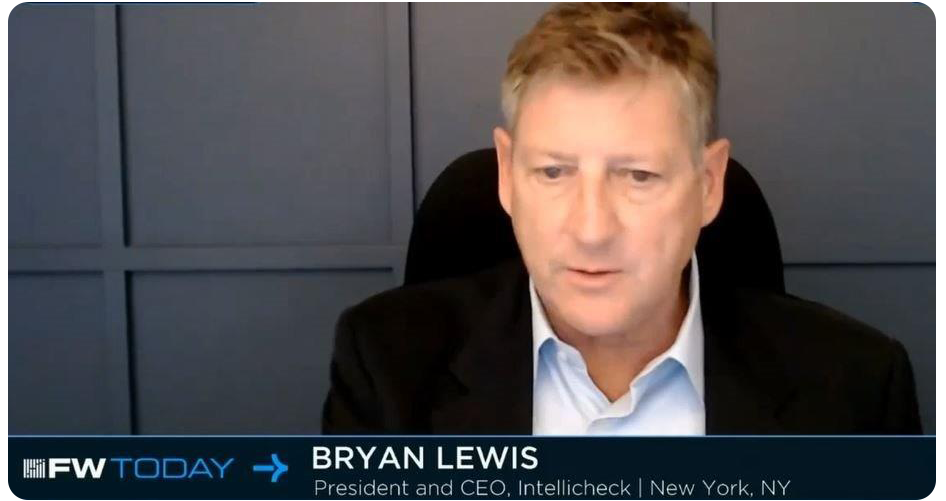
This podcast topic: The inaugural Intellicheck North America Identity Verification Threat Report. With us this week is Bryan Lewis, CEO. Our guest host is Charles Goldberg.
Our report is now available for download at https://www.intellicheck.com/threat-report.
Transcript
Charles Goldberg: Hello, and welcome to the first episode of season two of the Intellicheck podcast. This is the show where we delve into the news and issues around identity verification, identity fraud, and the tools needed to combat it. I'm Charles Goldberg and I'm happy to be the guest host for the kickoff episode of season two.
Today we will discuss the recently released inaugural Intellicheck North America Identity Verification Threat Report.
This week we have our regular guest and the big man himself, Bryan Lewis, the CEO of Intellicheck. Welcome, Bryan.
Bryan Lewis: Thanks, Charles. I'm looking forward to the conversation.
Charles Goldberg: So I reviewed the report ahead of this interview. It's very interesting to see how you analyze roughly 100 million identity verifications performed by Intellicheck in 2025 and share the fail rates for your customers across so many industries and subcategories. So my question is amazing data, but why are you sharing it now?
Bryan Lewis: I think it's good data so that people can understand how widespread identity theft is and continues to grow.
And you look at that number and it's about half the adult population going through our system. So it's pretty comprehensive data.
And, you know, I think it also helps, you know, potentially some of our customers to figure out where they might be missing a chance to stop fraud and for anybody who's reading it to realize where they might become victims of identity theft and fraud.
Charles Goldberg: Yeah, that makes sense. And that's pretty amazing to cover half the US and Canadian adult population. So that's, this is a very high quality data set. Really gives us a tremendous sample group of, you know, all demographics. So makes us highly valuable.
But one thing I couldn't help but notice is the wide variation in the percentage of failed identity verifications across all those different industries. So it isn't surprising that alcohol retails a whopping 15.1%. I think most of our listeners could relate to that from sometime in our lives.
But more interesting is the difference between, say, fintech and banks, 2.4% and 1.7% respectively. A 40% difference. So, two-part question here. First, help our audience understand why measuring failed identity verification rates is important.
And then second, let us know why there's such a stark difference during fintech and Banks.
Bryan Lewis: Yeah, so let's first, by determining what a failed rate means. Right.
What that means is that when we look at a driver's license, you know, or a state issued id, you know, coming from the dmv, the two most common forms of identity support that people use, when we scan that driver's license, we have unique knowledge about the barcode. So when we say it fails, it means it does not meet the exact specifications for that barcode for that jurisdiction on that date of issuance. And that's important because the documents that are being created by the bad guys AI is making it so it's really hard to look at it and know it's not fake. And you can easily create a barcode that's going to pass, but you can't create a barcode that's going to be the barcode, say for New York state issued in 2023. They just can't do that.
And then, you know, also I'd say is, you know, there's differences in, you know, rates of failure because what is the access method? Right. Most FinTechs tend to be online and online is a much easier vector for fraud because you're not standing in front of the person. So it's easier to spoof and do and oftentimes less secure tests are done on that now, whereas if you walk into a bank, you know, think about, you know, how many cameras around like you're photographed from 12 different angles probably. And it's, it amazes me that people will continue to go in, branch and try and perpetuate fraud. But it happens all the time, as you can see. And you know, the other thing is it might sound like small percentages but they're large numbers so the fraud adds up quickly.
Charles Goldberg: Yeah, on land. Of course when it's digital you're not limited to someone in the neighborhood trying to commit fraud. People could be anywhere in the world to your online presence. And I noticed on the report that the retail online only banks, so meaning those kind, those digital first world banks with no brick and mortar, their identity failure rates were at 5.5% so really high because their doors are open for the entire world.
Bryan Lewis: You hit the nail on the head, right? This is generally organized crime and it's often organized crime overseas. And it is very easy to have somebody you know, with, you know, bots and AI just whacking a bunch of online fintechs, banks, whatever it is, to try and get in, pretend there's somebody else because remember this data is so cheap. Think of how many breaches there were. I think 2025 set a new record for the amount of data that was breached. So all of our information is out there for sale. So you know, the cheat, the cheapest thing is buying the data. The more expensive thing is buying the fake id, which is not all that expensive. In bulk they're about 40 bucks so it makes it really easy for these people to do it. They're far away, they're not going to get arrested and, you know, they get the money. And if, you know, you find out that it was fraud, nobody can go after them.
Charles Goldberg: That totally makes sense. So let's talk about another part of finance which is also a big target for fraud. And I know that many of the largest credit card issuers who back those retail branded credit cards that we all get to get the discount, you know, that day trust Intellicheck for identity verification. And it's eye opening to see how the top 10 retail segments by failure rates experience different levels of fraud attempts, with arts and crafts leading the list at 5% and outdoor recreation closing the top 10 at 1.6%. So can you share your thoughts on credit card issuers and their relationship with their retail relationships?
Bryan Lewis: Yeah, you know, certainly what we know from our customers is there's a spread between how much fraud and risk each side takes on. You know, what does the retailer eat any of the loss? Is it all the bank? Is it spread? Is it based on account lookup or is it new issuance? So, you know, I think that part of it depends on who's taken the fraud and you know, how often they're going to, you know, take any kind of application in. And also I think fraudsters, you know, they talk, we see it on the dark web. They know where to go, they know where to try.
We see them say, don't go here, you know, you're not going to be able to break in, you know, oftentimes talking about some of our customers.
And then the other thing too is what's the value that you can get and how much credit might be issued and then what's the average demographic of the person and their income level at that particular, that particular retailer. So they're going to go after places where there's generally higher credit given.
And you know, there's two ways to think about what they're going to do when they're going to look, there's, you know, the new account opening, but then there's also the account takeover.
And you know, what I've always told people is new account opening. You can stop that by putting a hold on your credit, right, your credit reports. But that doesn't stop an account takeover because all they're doing is going in and saying, oh, hey, I'm Bryan Lewis, I forgot my credit card but I want my points, can you look me up? And they ask for the driver's license and you know, look at it and enter some stuff in if they're not using us. And because it doesn't require credit pull, it'll go through.
Now we stop both because when we scan that license, we're going to say, well, this is a fake. It really isn't. Bryan Lewis. So even if you don't have that credit hold put on, we're going to stop it and you won't become a victim of that account takeover fraud.
Charles Goldberg: Yeah, that totally makes sense. And you can't just trust a retailer to look at a driver's license nowadays to say, oh yeah, you look like you.
Because it's just so easy to make an ID to look like you, but put someone else's name on it. Right. That barrier has been.
Bryan Lewis: And what I'd say is, you know, I lived in New Jersey for 33 years, plus my condolences.
Yeah.
Charles Goldberg: And we're say that because I'm from New York.
Bryan Lewis: Okay, there you go.
And yeah, but I love the Garden State, so.
But I worked in the city for the same 33 years. I couldn't tell you what a New York driver's license looked like. So how is, you know, the clerk retailer in New York going to know what a Jersey license or a Connecticut license or Nebraska.
Charles Goldberg: Right.
Bryan Lewis: Yeah. Let alone, you know, some other state.
So. And given that, you know, people have, you know, know big retailers are everywhere, Right. You get a, you know, a Home Depot credit card, it's going to work in every Home Depot. And if you don't carry your card and you want to look it up, it's going to work in any state.
So you, you know, I feel sorry for the retail clerks because they're not trained. It's one of the reasons so many law enforcement agencies use us is because they're trained law enforcement officers. Can't tell them apart because AI is making the document so realistic. You know, the naked eye can't figure it out.
Charles Goldberg: Right. Yeah. And if law enforcement agents use Intellicheck to check IDs, right. Because they, you know, the training at this point, they can't be trained to do visual checks as reliably, you know, as, as we can check.
There's no way a cashier with all
Bryan Lewis: That, they got all these fakes.
I got fakes from my own state. I look at them, I'm like, I can't tell it apart. So, and I look at them all the time. Somebody who doesn't, you know, they just, it's an uphill battle for them that they can't win.
Charles Goldberg: Yeah, makes sense. So switching gears a little because you know, most of the report is about financial fraud attempts, insurance, you know, the kind of the first things that come to most of our minds when we think about fraud and financial fraud and identity fraud. But you had something very interesting in the report that really caught my eye at the end of the report. It offered a very interesting analysis on password resets. So that's quite a field compared to the rest. So can you tell us about that?
Bryan Lewis: What they figured out is, you know, if I get control of your email account, I now control your whole life. If you think about almost everything that happens, if you want to do a password reset, they're going to send, you know, that reset to your email account, right? So I can change your bank account, your investment account, you know, passwords on your social media, you know, all sorts of passwords that can both ruin your life but also drain your bank account.
So it is a quick and easy way to get in to then perform a ton of account takeover. And you're not going to know because I've got your email, the resets are coming to me, I'm resetting the passwords and now I'm logging into everything that you have. And it's kind of simple for them because they can go search and see, you know, where, where do you bank and where do you do these things and if not even all that stuff is pretty much for sale online.
So it's sort of like the wholesale marketplace for them to perform account takeover.
So people are realizing that you need to do more and you need to protect stronger than you are. And you know, even with MFA and other things, you know, and certainly, you know, we've seen plenty of times that somebody goes into a store, you know, a store to get a new telephone and they're not proven who they are and it's a basic SIM swap. And now even with that phone, I control things and say, oh, I forgot my password to my email or my whatever and reset it all right there and then it even two-factor isn't going to work because now I've got the phone number, so it's all going to come to me as well.
So security, when I'm looking at this, I think it just proves to everybody and where everybody should be getting a little bit worried is it used to be, you know, identity theft was really like how do I get instant money and take over your credit card or your bank account? But there's so many other places now where you got to be careful. And people do need to start proving who's who. Email. The amount of houses sold out from other people, the amount of cars bought in other people's names, you know, high ticket items that you wouldn't think of. But the crooks are always evolving and figuring out where can I get the easiest buck as fast as possible?
Charles Goldberg: Yeah. I mean, as you're telling me this story, where my mind went was if I could reset the password and own your bank account, I'm going to assume that you're going to use that same email on many other accounts. Let's pick Amazon or whomever. And I'm going to try that.
And if I get into that account, it might use multi factor authentication. And often. What is it? They're going to send me an email with a verification number. But now I own your email. So I'm going to paste that verification number into the other account.
Bryan Lewis: And then, you know, he's giving you multiple choices and you pick. They pick the one that they control. And now they've skirted multi factor.
Charles Goldberg: So, yes, within social media, I take over your account and reputational damage that I could do. Or, you know, the massive build with your network. Right. When they think I'm you.
Bryan Lewis: Right, Yep, absolutely. And it's other things too. Just, you know, you know, I always like to point out that, you know, our CTO's niece is a nurse and somebody impersonated her in a different state to get a nursing job. Right. So you've got to look at employment, which we're doing a lot of business in employment, because people need to know, are you really the person that you say you are? And particularly in this remote environment.
One of the things we didn't put in this study is we do track what we're doing on employment and how often those are fake. And it's a surprisingly large number.
Charles Goldberg: I'm not surprised. I mean, you read about all the time where, especially in this remote world, how you have people in all kinds of countries applying for jobs and sometimes they're just people looking to make money, but a lot of times they are spies, countries, you know, working for a nation state, trying to get into intellectual property. So they're creating perfect resumes, you know, for remote jobs. So I entirely believe that. One last question.
So how could someone who's responsible for fraud or security of their company use this report?
Bryan Lewis: I think they can compare themselves sort of almost benchmark, what are we seeing versus what we're seeing in this report?
And the reason I say that is, you know, we are very highly accurate at what we do. It's why law enforcement uses us. And what are your numbers compared to this? And if you're not catching as much, you know, and you can just look at what fraud, you know, you're seeing afterwards, I think it's important to look at all the different ways that you could be building, you know, the tools to fight fraud. And I would say that since we do it an entirely different way than almost anybody else in the space doing ID validation, look at those numbers compared to yourself, and then see what we're doing differently. You know, that's. That's what I'd say.
I'm always looking to find out what's new and different out there that I should be using. And I think, you know, anybody who's in this space, fraudsters are evolving all the time. So I think everybody needs to make sure that they're looking at every tool out there so they know that they have all the right arrows in their quiver.
Charles Goldberg: That's really valuable advice. Thank you. Well, that's all the time we have for today. My guest on the Intellicheck podcast has been Intellicheck CEO Bryan Lewis, and we've been discussing the new Intellicheck North America identity Verification Threat Report. Be sure to check out the show notes in the description where you'll find a link to download the full report. And I highly recommend that you download it and as Bryan recommended, compare yourself to your peers and see how you're doing. And if it's different, is it curious, Is it different because it's different? Or is it different because maybe you're not capturing all that's coming your way? You know, you have too many false positives or false negatives. You're just missing the detection of all the fake IDs that are out there. And I'm sure Bryan's team would be happy to help with an analysis in your organization.
Bryan Lewis: We would love to do that. Yes.
Charles Goldberg: Yeah. So that's all for this week. Thank you for listening to the Intellicheck podcast, and stay safe.

.png)