How Identity Verification Prevents Real Estate and Lease Signing Fraud

Access this Resource
Author

RESOURCE Info
Mentioned in this article
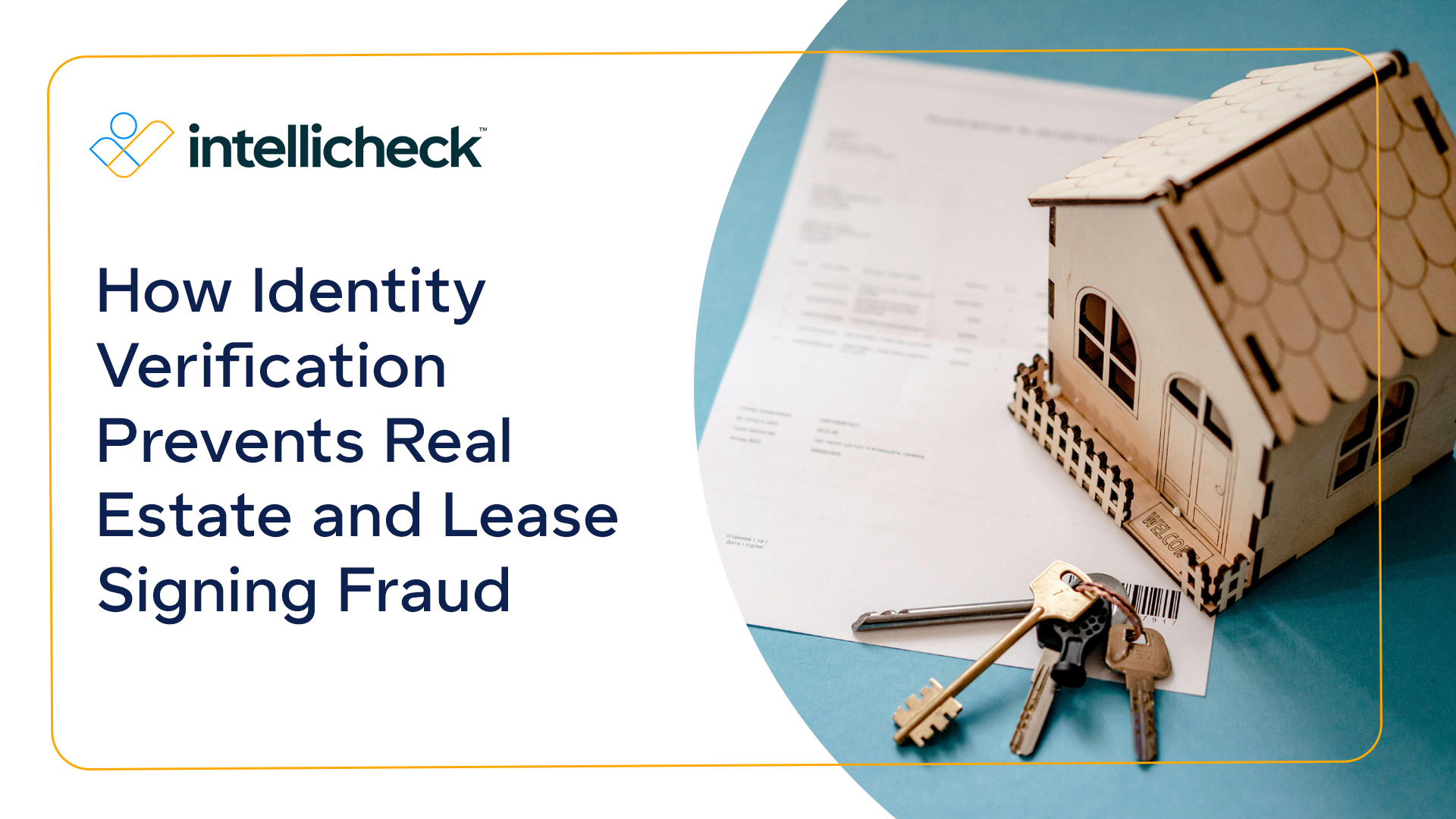
Real estate transactions, whether purchasing property, signing leases, or closing title agreements, depend on one critical factor: trust in identity. Every agreement assumes that the person signing documents is exactly who they claim to be. But that assumption is becoming increasingly risky.
Fraudsters are using stolen identities, synthetic identities, and highly sophisticated fake IDs to impersonate property owners, tenants, and buyers. In high-value real estate transactions, a single fraudulent identity can result in major financial losses, legal complications, and reputational damage for title companies, property managers, and real estate professionals.
To protect transactions and clients, organizations across the real estate ecosystem are modernizing how they verify identities by moving away from outdated visual inspections and toward real-time digital identity verification.
The Growing Risk of Fraud in Real Estate Transactions
The real estate and title insurance industries have undergone significant digital transformation in recent years. Online applications, remote closings, and digital document signing have made property transactions faster and more convenient. However, these advances have also created new opportunities for fraud.
Traditional identity verification methods, such as visually inspecting IDs, photocopying documents, or manually recording identification information, were not designed to detect today’s sophisticated identity fraud techniques.
As a result, real estate organizations are recognizing the need to modernize identity verification to better protect transactions and clients.
By adopting modern identity verification technology, title companies and property managers can:
- Reduce exposure to identity and title fraud
- Improve compliance and transaction auditability
- Protect property owners, buyers, and tenants
- Maintain fast and seamless closing experiences
- Increase confidence in every real estate transaction
Importantly, stronger identity verification does not need to slow down the closing process. Modern solutions allow organizations to improve security while maintaining a frictionless experience for clients.
Where Identity Verification Fits in the Real Estate Process
One advantage of modern digital identity verification is flexibility. Verification can be performed at multiple points throughout the real estate transaction lifecycle.
For example, identity checks can occur:
- During initial lease or rental applications
- During buyer or tenant onboarding
- At document signing
- At the final closing
Using a smartphone or tablet, identities can be verified in seconds, allowing organizations to strengthen fraud protection without slowing transactions or disrupting the client experience.
A Real-World Example: Securing Real Estate Closings
One title company recently partnered with Intellicheck to modernize its identity verification process and strengthen protection against fraud.
Previously, the company relied on traditional visual inspection of identification documents during the closing process. While this approach was simple, it exposed the organization to the risk of identity fraud.
After integrating Intellicheck into their workflow, the company was able to modernize its verification process without disrupting operations.
The results included:
- Instant identity verification using a smartphone or tablet
- Real-time detection of fake or altered IDs
- An auditable log of the identity verification transaction
- A seamless client experience during closings
- Stronger fraud protection without adding steps to the transaction
Because Intellicheck requires no specialized hardware, is very easy to use, and requires minimal workflow changes, the company was able to deploy the solution quickly while improving both security and operational confidence.
How Intellicheck Secures Real Estate Closings and Lease Signings
Intellicheck helps real estate professionals, property managers, and title companies verify identities quickly and accurately during property transactions.
Rather than relying on visual inspection or photocopies of identification documents, Intellicheck analyzes the authoritative barcode data embedded in North American driver’s licenses and identification cards. This data is issued directly by government authorities and contains encrypted identity information that can be validated instantly.
When an ID is scanned, whether at a client’s kitchen table, leasing office, or remotely, Intellicheck verifies the document’s authenticity in less than a second. This ensures the ID is legitimate and has not been altered, tampered with, or digitally manipulated.
Because the process is fast and frictionless, organizations can strengthen fraud protection without adding delays or complexity to the signing process.
Protecting Real Estate Transactions Without Adding Friction
As real estate transactions become more digital, fraudsters are finding new ways to exploit identity verification weaknesses. Relying on outdated manual processes is no longer enough to protect high-value property transactions.
Modern identity verification allows real estate professionals to balance two critical priorities: security and customer experience.
Intellicheck provides the real-time identity certainty needed to protect real estate closings and lease signings, while maintaining the fast, seamless experience clients expect.
With accurate, real-time identity verification, organizations can move forward with confidence, knowing that every transaction begins with a trusted identity.
Contact us to learn more.
.png)