The Teller Window Is the New Front Line in Identity Fraud

Access this Resource
Author

RESOURCE Info


%20copy.webp)
For credit unions, trust is everything. Members rely on their institutions to safeguard their accounts, protect their identities, and ensure that every transaction is legitimate.
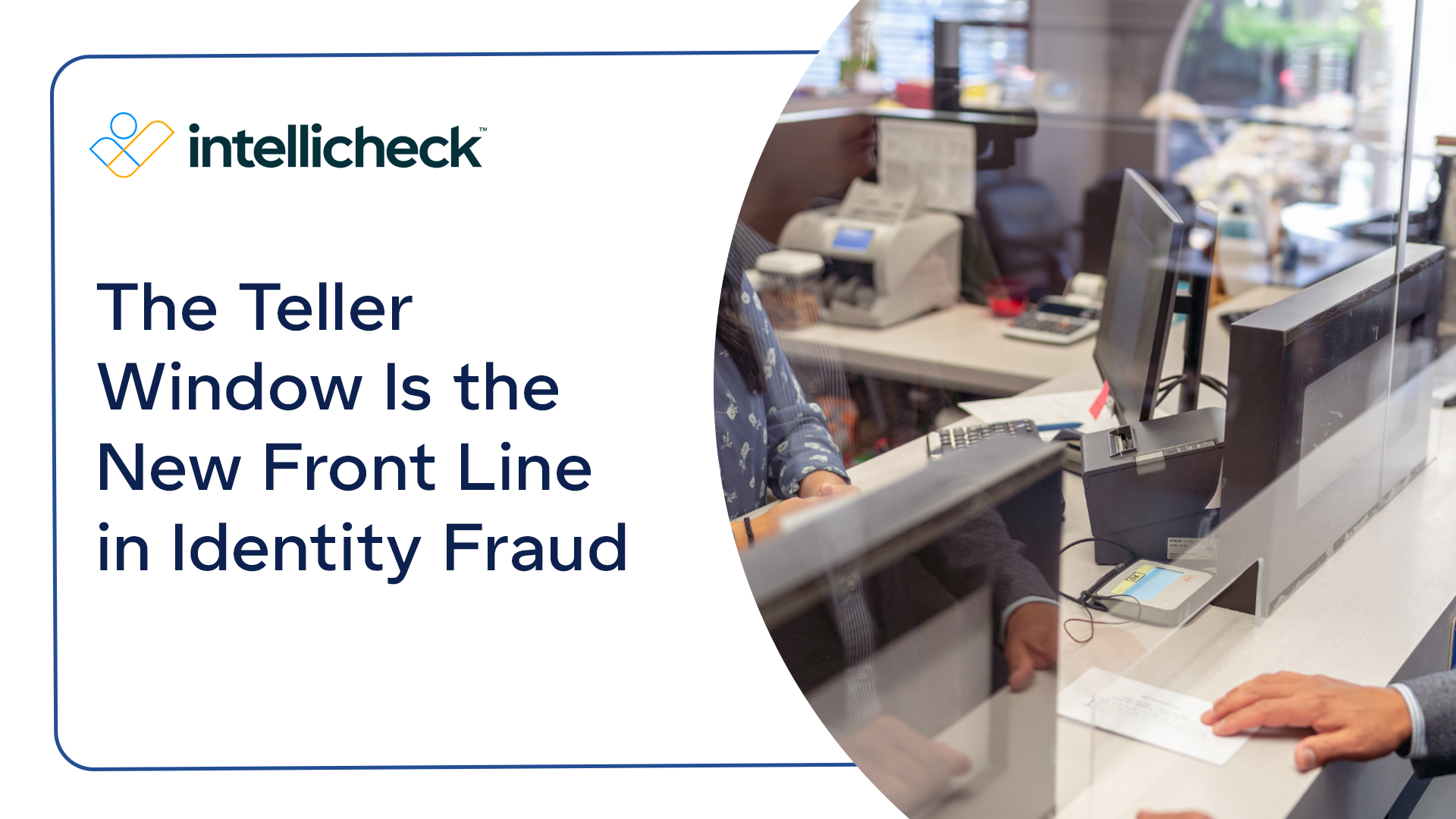
At the same time, identity fraud continues to accelerate, and it is no longer limited to online scams or stolen passwords. Today, criminals are walking into branches with highly convincing fake IDs, attempting to open accounts, withdraw funds, or take over existing member accounts. In many cases, the only thing standing between a fraudster and a successful transaction is a teller making a split-second judgment about whether an ID is legitimate.
Why Fake IDs Are Getting Harder to Detect
Fraud tactics have evolved dramatically in recent years. Criminals now combine stolen personal information with synthetic identities and sophisticated counterfeit documents to impersonate legitimate members.
AI-powered tools can generate highly realistic fake driver’s licenses and identity documents that closely replicate official formats and security features. These counterfeit IDs are designed specifically to bypass traditional identity verification methods.
Most fake IDs today follow publicly available barcode standards, allowing them to pass many conventional verification processes, including:
- Visual inspection by staff
- Template-based ID scans
- Manual identity verification procedures
The problem is that these approaches were never designed to detect modern counterfeit documents.
Why the Teller Line Is a High-Risk Fraud Target
Credit unions offer a member-centric service model which emphasizes personal relationships, convenience, and fast transactions. Tellers are trained to deliver friendly service, not perform forensic document analysis.
Yet they are frequently responsible for ID verification during some of the highest-risk transactions in banking, including:
- Opening new accounts
- Authorizing large withdrawals or wire transfers
- Updating account information
- Issuing replacement debit cards
When identity verification fails at the teller window, the consequences can extend far beyond a single transaction. Fraudulent accounts can lead to loan defaults, account takeover attacks, chargebacks, and regulatory exposure.
Stopping fraud at the first moment of identity verification is critical for any financial institution.
Moving Beyond Simplistic ID Verification
To keep pace with modern fraud tactics, many credit unions are adopting automated identity verification technologies that authenticate government-issued IDs in real time.
Instead of relying on visual or template-based inspection, these solutions include analyzing the authoritative barcode printed on North American driver’s licenses.
While barcode formats follow public AAMVA standards, state Departments of Motor Vehicles embed additional security features and proprietary encodings within the barcode itself. These hidden signals act as authentication markers that counterfeit IDs cannot reproduce.
By validating this authoritative barcode in real time, credit unions can confirm whether an ID is legitimate within seconds.
A New Approach to Teller-Window Identity Verification
Modern identity verification platforms allow credit unions to transform existing teller workstations into high-assurance identity verification points.
With a simple scan of a member’s ID, the best solutions instantly authenticate the authoritative barcode, analyze embedded DMV security features, and cross-check the printed information on the license with the barcode data for consistency. Today’s most effective modern platforms incorporate multi-signal verification, combining several layers of analysis to detect increasingly sophisticated fraud attempts. This can include:
- Document authentication: Validating barcode and proprietary DMV-issued security markers that cannot be replicated by counterfeit IDs
- Data integrity checks: Ensuring the information encoded in the barcode matches the visible details on the front of the ID
- Image and tamper analysis: Detecting signs of manipulation, such as altered photos or synthetic identity artifacts
- Cross-channel consistency: Applying the same verification standards across branch, mobile, and online interactions
This layered approach is critical in an era where fraudsters use AI-generated identities and high-quality counterfeit documents designed to bypass single-point verification methods.
Equally important, modern identity verification solutions are designed to integrate seamlessly into existing teller workflows.
The result is a faster, more consistent, and more secure verification process that protects both the institution and its members while preserving the frictionless, high-touch service experience that defines credit unions.
Supporting Credit Union Compliance Requirements
Identity verification is not only essential for fraud prevention but also a core component of regulatory compliance.
Credit unions must follow Know Your Member (KYM) and Know Your Customer (KYC) principles when verifying identities during account opening and other regulated transactions. Under the Customer Identification Program (CIP) requirements of the Bank Secrecy Act, institutions must maintain documented processes for verifying member identities.
Manual ID checks can make this difficult. Visual inspection alone does not create a reliable audit trail and often leads to inconsistent verification practices across branches and staff.
Automated identity verification solutions help credit unions establish a frictionless and auditable KYC process across both branch and digital workflows.
With automated ID authentication, credit unions can:
- Support CIP identity verification requirements during account opening
- Maintain a documented audit trail for NCUA examinations and internal audits
- Apply consistent identity verification policies across branches and channels
- Verify identities across both in-person and digital member interactions
By strengthening identity verification processes, credit unions can reduce fraud exposure while demonstrating a reliable and compliant approach to member authentication.
Intellicheck Identity Verification for Credit Unions
For credit unions, getting identity verification right is not just about preventing fraud, it’s foundational to maintaining member trust, meeting regulatory requirements, and delivering a seamless member experience.
Intellicheck enables credit unions to move beyond manual ID or simple template-based checks by validating authoritative DMV barcode data and analyzing hidden, state-issued security features that counterfeit IDs cannot replicate. In seconds, it delivers a clear pass/fail decision across both in-branch and digital channels, creating a frictionless, auditable KYC process that strengthens CIP compliance while reducing risk.
With real-time, high-confidence identity verification at every point of interaction, credit unions can stop fraud at the source—before it impacts members, operations, or the bottom line.
Contact us to learn more.