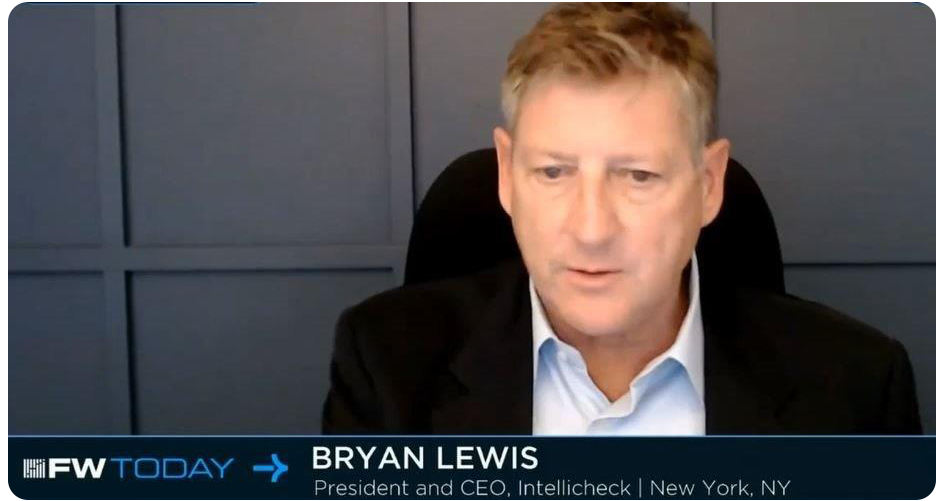
Stopping Synthetic IDs the Intellicheck Way


Access this Resource


Synthetic identity fraud doesn't announce itself. There's no stolen wallet, no fraud alert, no victim checking their credit report. A fraudster pairs a real Social Security number — often one belonging to a child or someone who doesn't actively monitor their credit — with a fabricated name, birthdate, or address, and builds a "person" who has never existed. That identity opens accounts, builds credit, and disappears with the money before anyone notices there was never a real person behind it.
It's also getting harder to catch. TransUnion puts total U.S. lender exposure to synthetic identities across auto loans, bank credit cards, retail credit cards, and unsecured personal loans at $2.6 billion at the end of 2025, and 78% of U.S. data breaches that year exposed full Social Security numbers — the highest rate since TransUnion started tracking in 2020. Generative AI has only accelerated the problem: fraudsters can now produce synthetic IDs that are nearly indistinguishable from genuine ones to the human eye.
How this shows up, industry by industry
It plays out differently depending on where a business sits in the account lifecycle:
Banking and FinTech: New account opening is where this does the most damage — a fabricated identity applies for a checking account or credit card, builds a clean payment history for months, then maxes out credit and disappears. New account fraud accounted for 35% of identity misuse industry-wide. Intellicheck's Threat Report puts FinTech invalid-ID rates at 2.4%, reflecting how much exposure fully-online onboarding carries.
Credit unions: As they expand online membership and lending to compete with digital-first banks, the same exposure follows — without always having the fraud infrastructure larger banks have built. A synthetic identity that clears membership verification can originate loans and open share accounts before anyone notices the identity doesn't hold up.
Auto lending: Auto loans are one of the four tradeline categories TransUnion tracks for this exposure, and Intellicheck's own data shows a 1.9% invalid-ID rate in auto sales. Because dealership financing often moves fast and in-person, a synthetic ID that passes a visual check at the point of sale can walk out with a car and a loan attached to a person who doesn't exist.
Retail and BNPL: Fraudsters use fake identities to open retail-branded credit cards and buy-now-pay-later accounts, then max out initial limits — typically $750 to $2,500 per account — before the retailer or issuer catches on. Lender categories including BNPL show a 2.3% invalid-ID rate, and because these transactions run in huge volume, even a small failure rate adds up to significant losses.
Why most verification tools miss it
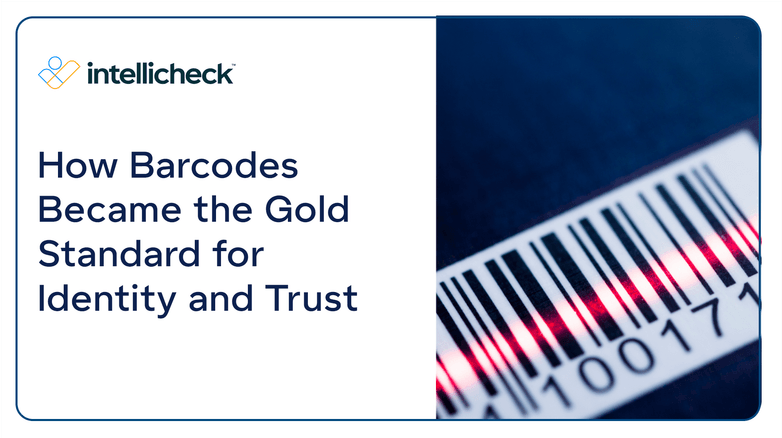
Most identity verification tools were built to read an ID, not authenticate it. Optical character recognition and template matching can confirm that a document looks like a driver's license — correct fonts, correct layout, correct placement of a photo. Even scanning the barcode isn't enough on its own: most counterfeit IDs scan just fine, and the data matches what's printed on the front, because anyone can generate an unauthorized barcode using tools freely available online. That's exactly what a well-made synthetic ID is designed to pass.
The Intellicheck way
Intellicheck takes a different approach. Every authentic North American DMV-issued ID carries a hidden, authoritative security layer embedded in its barcode that state DMVs encode but never publish, and that counterfeiters can't see or replicate. Intellicheck analyzes that layer directly. If it’s missing, malformed, or doesn't match the authoritative pattern DMVs encode, the ID is flagged instantly. A synthetic ID can look flawless and still fail at this layer, because the fraudster building it never had access to what they'd need to fake.
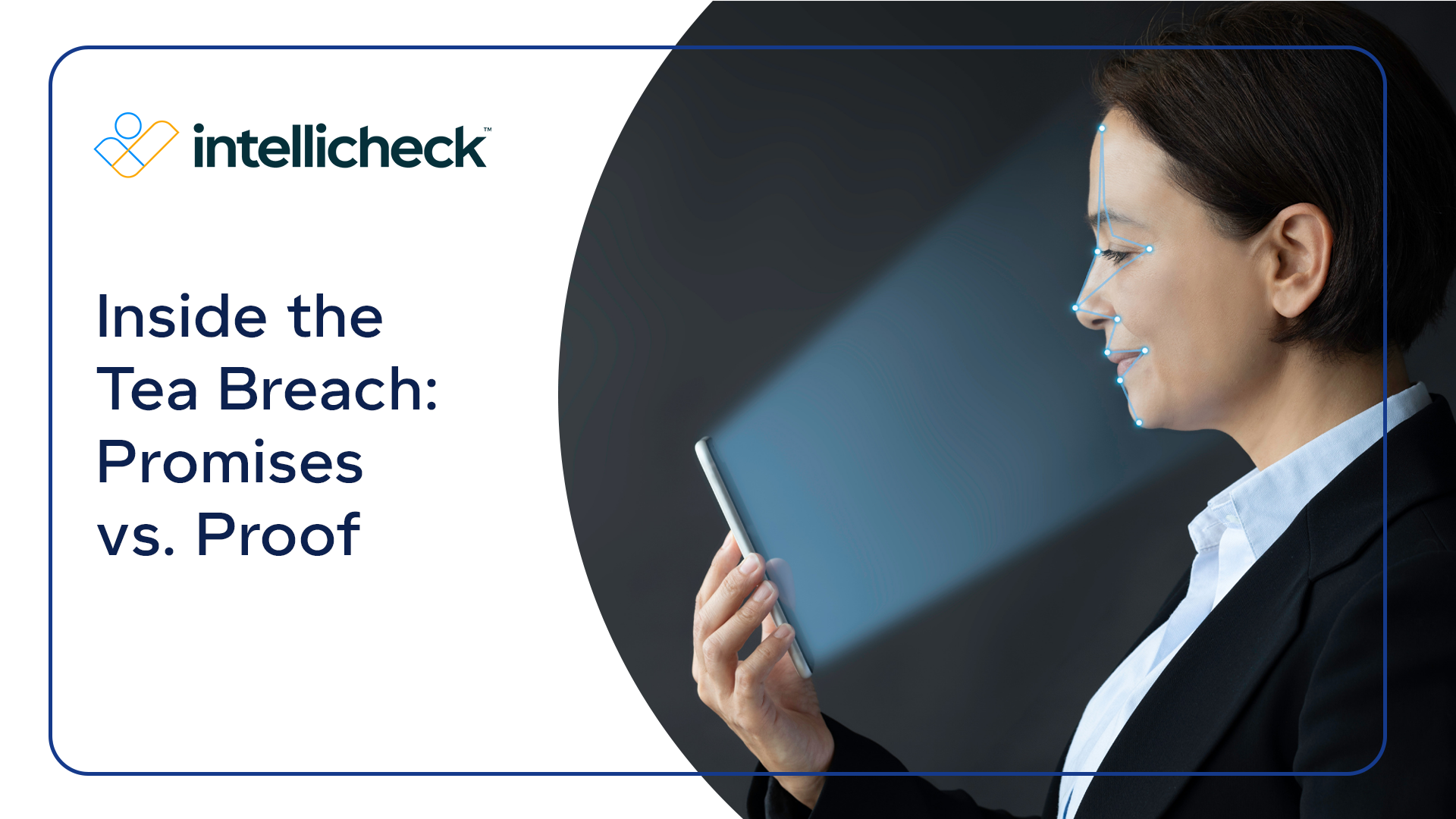
That barcode analysis is the foundation, and Intellicheck can layer additional signals on top of it for a fuller risk picture: Doc Liveness detects digital or printed replicas rather than genuine physical documents, Face Verify matches the ID portrait to a live selfie, Device Confidence evaluates device signatures and geolocation, and International Verify extends coverage to global ID documents when transactions call for it. Signals can be added dynamically based on risk, so verification stays fast for legitimate customers and gets more rigorous only when something warrants a closer look.
What it delivers
The result is real-time accurate decisioning, without relying on manual review or human judgment calls that fraudsters are increasingly good at beating. Intellicheck processes identity verifications for close to half the adult population in the U.S. and Canada each year — roughly 100 million transactions — and is trusted by 5 of the 12 largest U.S. banks and credit card issuers, along with more than 28 state law enforcement agencies.
Synthetic identity fraud works by exploiting the gap between what a document looks like and what it actually is. Closing that gap — for every industry building new account relationships online or in person — is Intellicheck's core strength.
See how it applies to your business: Synthetic Identity Fraud Detection →