Seller Impersonation Fraud Has Doubled: How to Stop It

Access this Resource
Author

RESOURCE Info
Mentioned in this article
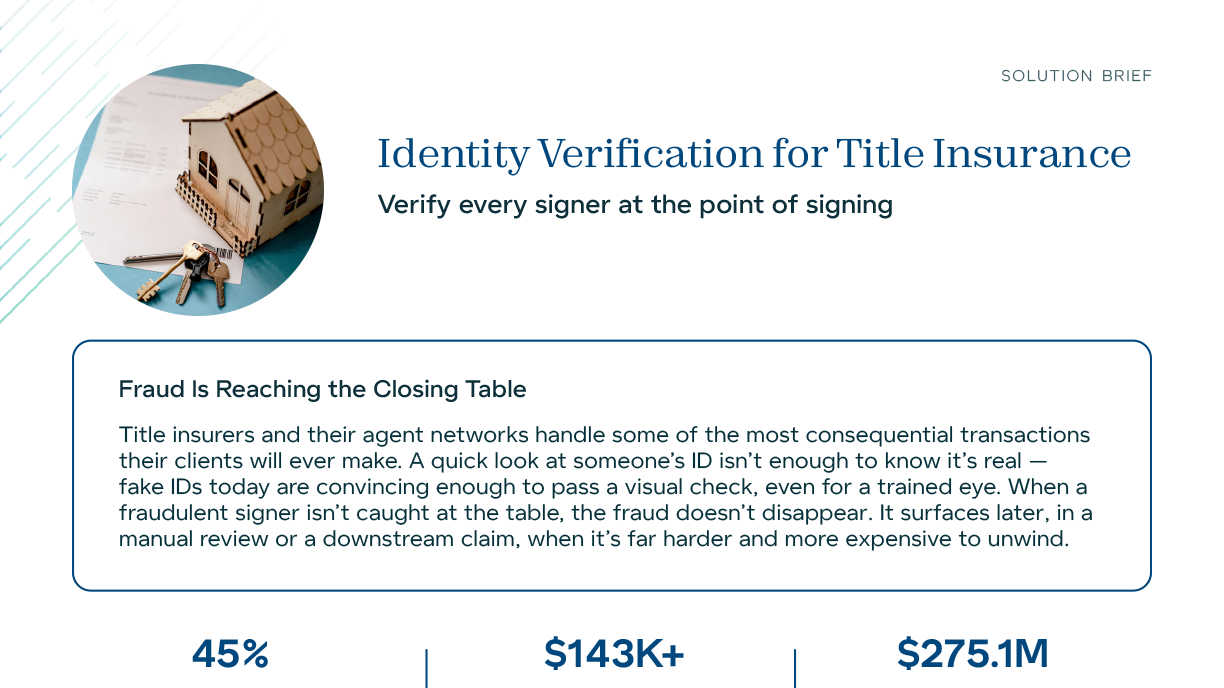
I expected new research from the American Land Title Association (ALTA) to show an increase in seller impersonation fraud. I didn't expect it to double in two years.
How Much Has Seller Impersonation Fraud Grown?
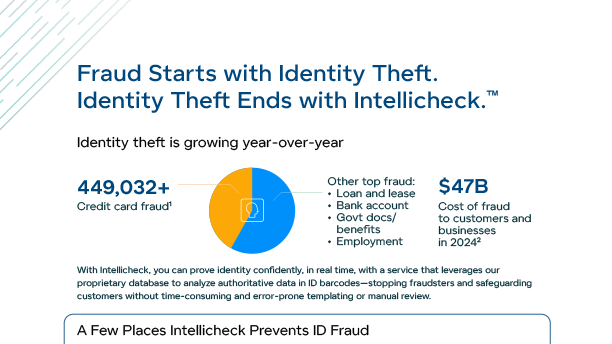
According to ALTA's Seller Impersonation Fraud Study, a survey of 245 title professionals across 40 states, 59% of title firms saw at least one seller impersonation attempt in 2025, up from 28% in the association's 2024 study. The pace is just as striking. In April 2026 alone, 45% of firms reported an attempt, compared with 19% in the same month two years earlier. This is no longer a fraud type that shows up in a few hot markets. It's a standing threat for most title companies in the country.
When these schemes succeed, they're expensive. Among firms that saw an attempt, one in four ended up paying a title insurance claim tied to the fraud. And among firms that reported claim amounts, half said the average claim cost more than $100,000.
Which Properties Are Seller Impersonation Fraudsters Targeting?
Vacant land is still the most common target, named by 82% of respondents. But every other property type grew compared with the 2024 survey, including vacation homes, rentals, and agricultural land. Even primary residences are now on the list: a quarter of respondents said they had seen fraudsters target one.
Respondents also saw fraudsters focus on specific ownership situations: absentee owners, properties owned free and clear, and properties belonging to someone who recently died. Each one gives the fraudster an advantage. An absentee or deceased owner isn't around to notice a sale in progress. And a property with no mortgage has no loan to pay off at closing, so nearly all of the sale proceeds go to whoever is posing as the seller.
How Do Fraudsters Get Past Title Company Identity Checks?
For me, the most important finding is how these schemes get through. Nearly nine in ten respondents named spoofed contact information as a common tactic. Fraudsters routinely arrive with the real seller's birth date, Social Security number, and financial details. And close to six in ten respondents said manipulated voice or images — deepfakes — are becoming a regular part of the playbook.
Put those together, and consider which checks a well-prepared fraudster can now pass:
- Knowledge-based answers (KBA). Most knowledge-based questions are drawn from credit and public records, such as past addresses, previous lenders, or loan amounts. A fraudster holding the seller's SSN and financial history can often answer them. Even answers to personal questions, like the make of a first car, can turn up on social media or in data from earlier breaches.
- A phone or video call. The top red flag in the study is a seller who avoids calls and video. And now that voice and video are so easily deepfaked, the next fraudster may not need to avoid them at all.
- A visual look at the ID. Today's counterfeit licenses look real enough to fool someone checking them by eye, whether across a closing table or on a video call.
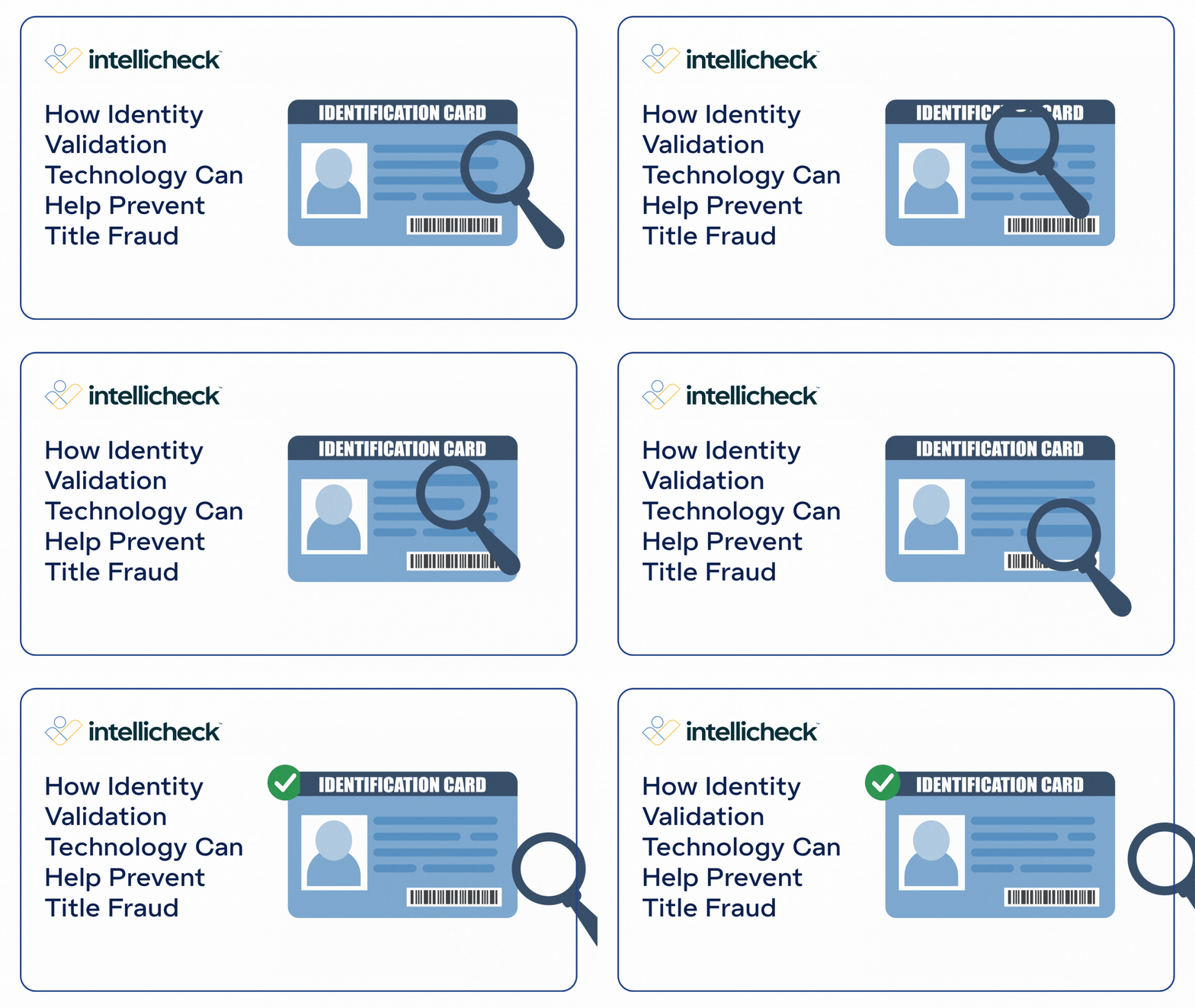
- A basic barcode scan. Anyone can generate a barcode that reads cleanly and matches what's printed on the front of the card. A scan that only confirms that the ID agrees with itself hasn't confirmed that the DMV issued it.
Fraudsters also try to control how their identity is verified. Requests for mail-away signings, using a notary chosen by the person claiming to be the seller, ranked among the most common red flags in the study. That's a fraudster trying to decide who examines the ID and how.
How Can Title Companies Stop Seller Impersonation Fraud?
ALTA's respondents rated identity verification systems the most effective tool against seller impersonation, at 92%, and 94% said they rely on multiple tools rather than one. The firms that felt best prepared also used the broadest set of controls. I agree with all of it.
But layering only helps if the layers fail in different ways. A stack of checks that all rely on information the fraudster already has, or on appearances the fraudster can generate, repeats the same weakness several times.
The layer that changes the math checks something the fraudster can't fake: whether the DMV actually issued the ID. To pose as the seller, a fraudster needs an ID with the seller's name and the fraudster's own photo, which means a counterfeit or altered document. Every issuing DMV embeds a hidden security layer in the barcode of its licenses and IDs. It isn't public, and counterfeiters can't replicate it. Intellicheck authenticates that layer. So the question is no longer "Does this ID look right?" or "Does the data match itself?" It's "Did the DMV actually issue this ID?" An accurate decision comes back instantly, with no manual review to slow the file down.
And if a fraudster shows up with the real seller's stolen ID, Intellicheck's biometric selfie check confirms whether the person presenting it matches the photo on it, with liveness detection that flags deepfakes.
When Should Title Companies Verify Seller Identity?
Title companies should verify seller identity early in the file, before funds move or a deed is recorded. They should also do it through a process they control, not one the seller sets up. That process should work the same way whether the seller signs in the office or remotely.
That's how two of the top three title insurers in the country use Intellicheck today: as one consistent standard across their agents, rather than a judgment call at the closing table.
Fraudsters will keep getting better at knowing what the seller knows and looking the way the seller looks. ALTA's numbers show how fast that's happening. What they still can't fake is the hidden security layer the DMV builds into every genuine license and ID. That's the layer every title company's verification process should be checking.