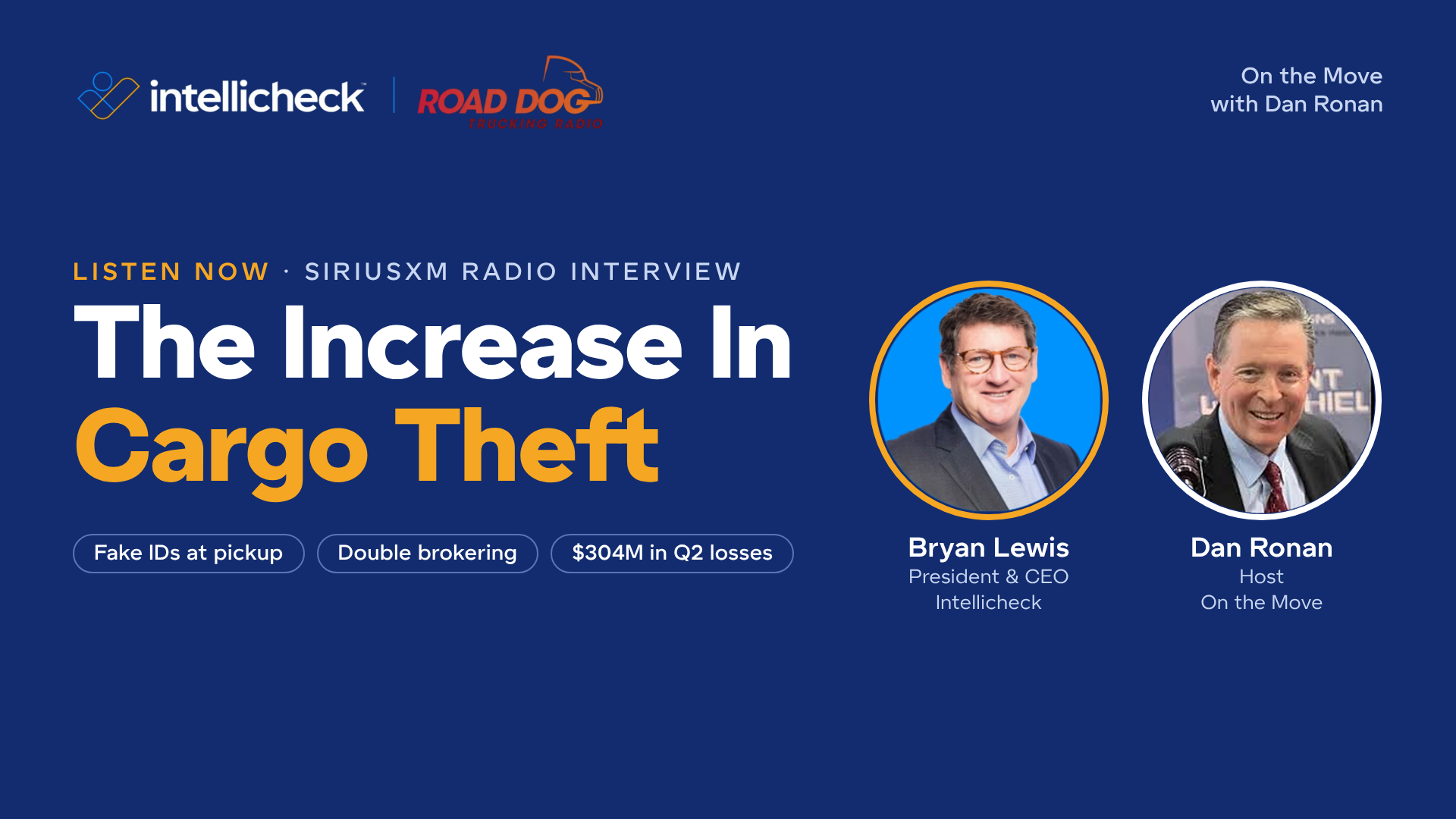
SiriusXM's "On the Move" Interview with Bryan Lewis on Cargo Theft

Access this Resource
Author

RESOURCE Info
Mentioned in this article
Transcript
Announcer
The headlines are only the beginning. Behind every transportation story are thepeople making decisions, solving problems, and shaping how America moves. Thisis where they come to talk. This is On the Move, America's transportationconversation from Washington, D.C. Here's your host, Dan Ronan.
Dan Ronan
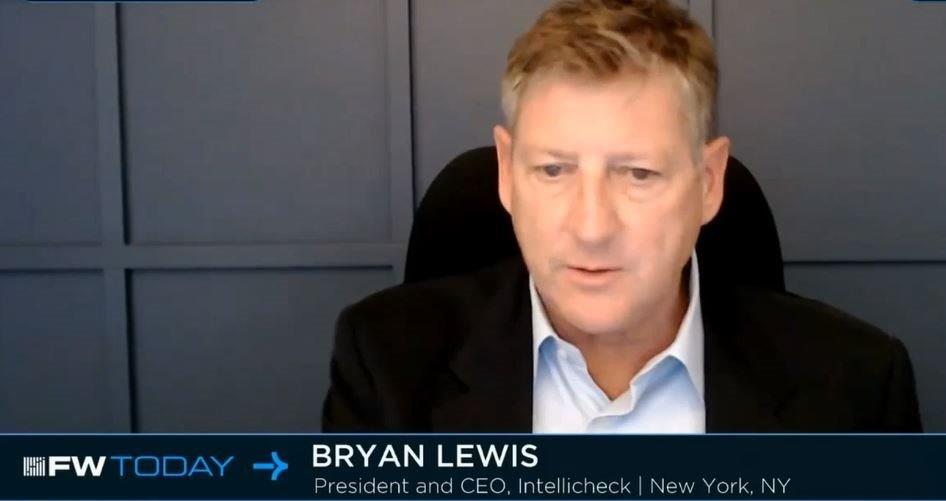
And good afternoon. Shifting gears from cybersecurity, we are going to betalking about cargo theft and some of the trends in the transportation andtrucking industry. Joining us on the newsmaker line from Beaufort, SouthCarolina, and Intellicheck is Bryan Lewis. He's been with us before, and wewelcome him back. Bryan, how are you? Good to hear your voice again.
Bryan Lewis
Yeah, happy to be here. Nice talking to you again.
Dan Ronan
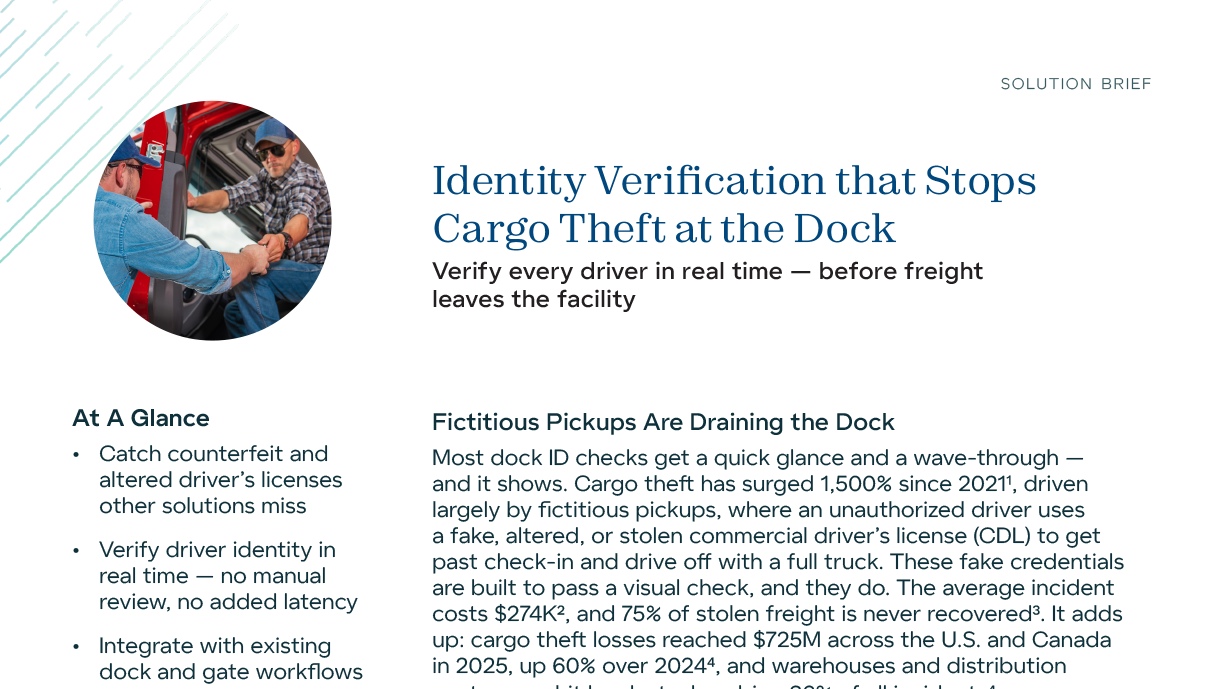
Bryan, some notes have come in front of us: 677 supply chain theft incidentsacross the United States in the second quarter of the year. Okay, down 25% yearover year, but the losses are way up, from $135 million to $304 million. So itwould seem to me that the thieves know what they're taking, have an idea whatthey're stealing, and they're trying to get the really good stuff.
Bryan Lewis
I would absolutely agree with that. Organized crime, they're not stupid.[unclear] for being criminals, but they know where to go to get the money. Andwe're certainly seeing that through the companies that we deal with. They'regoing for high-value targets. They've refined what they've done. Just given theincrease between '24 and '25, and even now we're seeing it in '26, they'vegotten smart. They've found a soft underbelly, and they're going after it.
Dan Ronan
And so again, this leads one to believe that if you're a thief, and that's yourchosen profession, you don't need to walk into a bank with a handgun, wearing aRichard Nixon mask, and tell the clerk, "Give me all the $10 bills andmake sure they're not in sequence." You figure out a way to get intosomeone's network and steal cargo electronically. That seems to be a much saferand more lucrative way to do your business.
Bryan Lewis
Yeah, it certainly pays off more. The average bank robber doesn't walk out withthat much, but the average cargo thief is walking away with about $275,000worth of merchandise each time they steal a load. So it is lucrative, it ismuch harder to get caught, and they're seeing it be profitable.
Dan Ronan
What can fleets do? It seems as though the number of thefts, as you point outin the report, a 26% year-over-year drop, is a very significant number, sopeople must be doing something better.
Bryan Lewis
I think there are a couple of things. I think there are two reasons things godown. One is they stop going after low-value targets, so the numbers do godown. And we're seeing that. The stats show it: the number is down, but theloss has doubled.
And I think at the end of theday, no matter how they're going about attacking, whether it's carrier identitytheft or double-brokering or re-brokering, they're doing all of that, it meanssomebody who is pretending to be somebody else is going in to pick up thatload. And for most people, just like a lot of banks, identity theft is easy ifall you're doing is a visual inspection, and that's what most people do.They're just like, "Okay, cool. Driver's license looks great. Here you go.Hook up. See you later."
A lot of what we're seeing now,particularly with some of the folks who have been burned, is they're usingtechnology to make sure that Bryan Lewis shows up to pick up that load. Thatreally is Bryan Lewis. That is a legitimate license. That is somebody who weshould let drive out with that load.
Dan Ronan
What is your definition of a low-value target or a high-value target?
Bryan Lewis
I think what we're seeing is a lot of things. It's funny: food and beverage, wecertainly saw that with a giant tequila load that got stolen. Meat and seafood,things that are very valuable and can be sold very easily. And then metals seemto be where people are really going, particularly copper. Those are the thingsI think they've started focusing on. Instead of just going random, they'retargeting things that are high-value and easy to resell.
Dan Ronan
Bryan, to that end, I've told our listeners about an experience I had a coupleof months ago, and I want to get your reaction to it. I was going one nightinto a grocery store. It's not the grocery store I usually go to; it was near acollege where I teach as an adjunct. I was coming out of class, had to stop onthe way home and pick up a couple of things.
I'm walking into the grocerystore, and there's this guy with a Ford F-150 pickup truck, and he's got acooler on the back of the truck. "Come here, mister." I said,"What do you need?" He said, "That hamburger you're buying thereis going to cost you $6 a pound." I said, "Okay, so what?" Hesaid, "I've got stuff here that's better, and I'm selling it right now for$5.50 a pound," or whatever it was. I said, "Nah, it just doesn'tfeel right. Go ahead, do whatever you want."
But when I came out 15, 20minutes later, he had people buying. And I thought to myself, that stuff's hot.It's so hot. But I thought, as a criminal, he was pretty brazen, because notonly does this lot have 50, 60, 70 stores in it, it has a police precinct init.
Bryan Lewis
Yeah, they're brave, and it's a matter of what's going to be enforced. Theyprobably didn't have enough of the stolen merchandise in there that anyone'sgoing to care. And that's what it boils down to. I love law enforcement. Theydo a great job, but it's where it makes sense for them to enforce. And you'reright, that was definitely stolen merchandise they were out there selling.
And I see the same thing at mylocal grocery store. There'll be folks out selling all sorts of things. Andthat's exactly what they do: buy it, parse it out, sell it, put it inincrements that aren't really going to get a ton of enforcement.
Dan Ronan
And I thought to myself, I don't know where this has been. I don't know theprocess. I don't know if this guy re-froze this stuff after it had melted andspoiled. It doesn't have a USDA inspection sticker on it. I'm not buying it.
Bryan Lewis
I'd be worried about getting sick. I'm completely with you.
Dan Ronan
Yeah, so I just said, "No way, no thanks." He had no idea what I dofor a living, that I'm in the transportation business. So I just said,"No, I'm just passing."
So what are some of the thingsthat warehouses, trucking companies, and others involved in freight and thesupply chain can do to crack down on counterfeit credentials and those outthere impersonating legitimate drivers?
Bryan Lewis
Well, I think it's important because we're going into the high season. We seeall the attempts, right? Holiday weekends are big, and so are peak shippingseasons: times when it's urgent, people are overworked, the loads are big, thedistribution centers are filling up. They don't pay as much attention. Andthat's where technology can really help, because I don't have to worry aboutit.
A quick scan of a license usingproper technology. Because I think the important thing to point out is thatevery fake license will scan. They all do. And that's because AAMVA, the parentorganization all DMVs belong to, has a standard, and the only people who usethat standard are the bad guys. Every state, territory, and province has itsown unique barcode format, with all the information you need to know if it'sreal, and hidden security features. And the only way to actually make surewhether it's real or not is technology. You can't do it anymore just by lookingat it.
And we hear that from our lawenforcement customers. These fakes are so good, and AI is making them evenbetter. They need to start using technology and not just rely on goodold-fashioned eyeballing.
Dan Ronan
Can we out-technology the bad guys? We're going to get into an arms race ofsome sort with those on the other side. But can those of us on the legitimateside, the businesses that are legit, keep upping their game to stay one step,two steps ahead of the criminals?
Bryan Lewis
Well, I think there are two things if you look at that. The criminals certainlyare getting better, and almost winning the arms race, at duplicating thelicense, the image of it itself, the hidden security features, all that. Mostof these come from China, which is where we buy most of the plastic to createthem. So they already have the plastic to make the fake, and then it's just amatter of using AI to replicate it very well.
What AI and the bad guys can'tdo is break into the hidden security features in those barcodes. More and morestates, for example, are putting in things like digital signatures. You can'tcrack that. But if you know the digital signature, you can immediately say thisis real or this is not. And that's where technology comes into play.
You need to look for trustedpartners with the DMVs, as my company, Intellicheck, is, because we'll havethat information and we'll be able to tell somebody without slowing the processdown. It takes less than a second, about 44 milliseconds, to determine if thelicense is real or not, and everybody's on their way. And if it comes up false,you have an issue, because the only person who's going to have a fake licenseis somebody who's not doing good things.
Dan Ronan
You know, Bryan, for 100 or so years, no one's ever been able to crack the codeof what makes Coca-Cola, because they've compartmentalized it. Part of it is inone safe in Atlanta and part of it's in another, and only a handful of peopleunderstand everything it takes to make the soft drink. Are the bad guys, bygetting better, eventually going to be able to, since the manufacturingoriginally takes place in China and they make the plastics, get to 99.9% andbeat the barcodes, beat the scanners?
Bryan Lewis
I'm going to say no. And they've been trying for a very long time. It's becausethese things are very sophisticated. I've got a pretty smart data science team,and they come at it as, "I don't know anything. Can I reverse-engineerthis?" And they fail, because they're weird. Right.
And the other thing, too:certain states are much better at security in their licenses than others. So weput extra attention on certain states to see if we're seeing any trends, whatelse we can do, and how we alert our customers. But I'm going to say to date,there has been no widespread crack of it.
At the same time, we're workingwith the DMVs and helping them figure out how to do it more securely. Thathelps too, because there are things that are giant leaps forward in security,such as these digital signatures or other things that can be put into it.
So I'm going to say that, yes,they are definitely winning the game, or running parallel in the game, of thephysical document looking just like the real one. But they're not yet able, andI don't think they will be for a very, very long time, to crack the barcode'ssecurity features. Because the other thing, too, is that currently incirculation there are about 250 different valid formats, and we watch them all,because we want to make sure there hasn't been a breach or a break somewhere.
Dan Ronan
The website is Intellicheck. Joining us on the newsmaker line from Beaufort,South Carolina, Bryan Lewis with that organization, talking about the issue ofcargo theft. It's 4:18 Eastern Time, 1:18 on the West Coast. We'll continue ourconversation with Bryan Lewis here on SiriusXM 142.
Announcer
You're listening to On the Move, America's transportation conversation, theconversation behind the headlines. It continues.
Dan Ronan
4:22. Bryan Lewis joins us from Intellicheck. Intellicheck.com is the websiteas well. Bryan, you were talking before about some proprietary material thatyou and your team put together that can verify a driver's license prettyquickly, under a second. How does it work? I know we're not going to disclosethe secret sauce, but walk us through it: if I'm entering a warehouse or afacility, how is this going to work?
Bryan Lewis
Okay, it's real simple. We're the test lab for the states and provinces whenthey change their barcodes, so that gives us information about the barcodes andtheir hidden security features.
Quite simply, what a lot of ourcustomers in the carrier space are doing is downloading our app, and when adriver comes in to pick up a load, they just scan the barcode. We willimmediately tell them that it is good, it is bad, or it is good but the licenseis expired. We can also show them everything: it's a proper CDL, it has all ofthat encoded in the back, those types of things.
It goes all the way up to beingintegrated into some of our customers' systems, where they'll use differenttools to scan it, everything from the scanning gun you see at a grocery storeor department store to ring up merchandise, to devices that take images of thefront and back. Those are stored, and if there's an issue down the road, we'vegot all the data so they can investigate any thefts. So it depends on howsophisticated the customer wants to be, but at its simplest, in less than asecond, a quick scan of that barcode is going to tell you whether you've got athief on your hands or not.
Dan Ronan
Is this a red light, green light type of indication that the operator gets?
Bryan Lewis
At the very simplest, it is. But it can also build up. If we're getting imagesof the front, we can make sure all the data printed on the front of the licensematches what's encoded in the barcode, as secondary signals if they want.
We've even got some customerswho want to do it remotely, before the driver shows up. We can add facialrecognition to make sure the license is real, the front matches the back, andthe person holding it matches the image on the license. So again, it depends onhow detailed they want to go and what level of friction they want to put intothe pickup of that load. The majority of people are very comfortable with justthe barcode itself, because of the accuracy there.
Dan Ronan
Bryan, let me run a scenario by you. I'm a warehouse, and I am releasing atruckload of product that may be worth $8, $9, $10 million, whatever it is.Should I have a layered level of security? For the usual stuff, two checks andit's good. But for something I know is high value, I want to do a visualinspection. I want to talk to the driver. I want to see him. I want to see hisbill of lading. I want to scan it. I want to call the shipper and say we'reshipping out X units of this. And then I want to go through some sort oflayered process. Maybe it takes 10, 15, 20 minutes to do that. But on thereally high-value stuff, the good stuff, do I need to do that?
Bryan Lewis
I would say yes. Every customer we have, across every industry we're in, haswhat I would call a risk waterfall. The higher the value of a potential theft,the more you're going to put into it. Because what we're talking about here isthe outcome of a lot of things that might have been done upstream.
What we're seeing, too, is thata lot of this starts with compromising a business's email. We see that all thetime in every industry, and they're getting so good at copying it that peoplefall for it, and instructions change or other things change. So yes, I think itmakes sense: the higher the value, let's do more checks on what's going on.
Dan Ronan
Yeah, trust but verify. And also, if I'm a trucking company carrying aparticular piece of cargo, I want my best drivers on it. I want the driver whohas been with me the longest, who I know is honest, who is an Eagle Scout.
Bryan Lewis
Yeah. And that is one of the things I think data allows you to do. Everythingwe ever scan on a license, we give to our customers or store on their behalf,and then they can go through and see who's been good, who's not, who they like,who's done a ton of work with them. It can help them decide how they want torun their business going forward.
Dan Ronan
Are you encouraged by the fact that the number of reported cargo thefts in thesecond quarter dipped? I mean, 26 percent, that's a pretty good number.
Bryan Lewis
Yeah, but the one thing I would say is that the operative word there is"reported." Like you said, you've got about $300 million in losses inQ2, double Q2 of last year. But DHS puts the number much, much higher. They puta floor on it of about $15 billion in losses.
And we see this across everyindustry, whether it's somebody stealing your identity for a credit card, orsomebody stealing an identity or using a fake identity to steal a cargo load.Oftentimes it isn't reported to a national database where people can get realnumbers, so a lot of it is really estimated. I always take anything that hasbeen reported, and I certainly know from experience, that it's much, muchhigher than the reported number.
Dan Ronan
Bryan, it is a fascinating topic, one we spend a lot of time talking about hereon On the Move. Thank you for bringing us up to date, and for talking aboutsome of the things the trucking and freight industry can do to stop this.Because as we've discussed, the criminals are getting smarter and moredeceptive, and AI is making it easier. It's giving them more opportunities tocreate more than a little bit of mischief.
Bryan Lewis
Absolutely, and it's easy, quick, and simple for them to do it.
Dan Ronan
Bryan Lewis joins us on the line from Beaufort, South Carolina. The website isIntellicheck.com. Bryan, thanks again. I know we'll do this again sometime inthe very near future.
Bryan Lewis
Thank you, Dan.
Dan Ronan
It's 4:30 now. Thomas Watson from FreightWaves is going to be joining us injust a few moments. We will be talking about Volvo Trucks' introduction of thenew VNX vocational truck, available as a tractor in day cab and sleeperconfigurations. Thomas Watson joins us next on SiriusXM 142.